
Beef Wellington is a classic dish consisting of a fillet of beef, with a layer of duxelle (a mixture of finely chopped mushrooms, shallots and herbs), all wrapped in puff pastry and baked until golden brown. It is a dish often served on special occasions and holidays. Here is a recipe that is partly taken from Gordon Ramsay.
Enjoy your Beef Wellington! It is a dish that is sure to impress your guests.
The name “Beef Wellington” is generally believed to be named after Arthur Wellesley, 1st Duke of Wellington.
Who was Arthur Wellesley, 1st Duke of Wellington?
A prominent British military and political figure in the late 18th and early 19th centuries. He is best known for his decisive victory over Napoleon Bonaparte at the Battle of Waterloo on 18 June 1815. This victory made him a national hero in Britain.
He was also Prime Minister of the United Kingdom on two occasions (1828–1830 and 1834).
The classic Wellington boots are also named after him, as he popularised a leather boot that later evolved into the modern wellington boot.
Why is the dish Beef Wellington named after him?
The exact connection between the Duke of Wellington and the dish is not entirely clear and is surrounded by several theories and legends:
A tribute to the victory at Waterloo: The most popular theory is that the dish was created to celebrate the Duke’s victory over Napoleon at Waterloo. It was a way of paying tribute to the national hero.
A “re-branding” of a French dish: Many historians believe that Beef Wellington is actually a variation of the French dish “filet de bœuf en croûte” (fillet of beef in a croûte). During periods of hostility between Britain and France, dishes with French names may have been given new, more patriotic, English names.
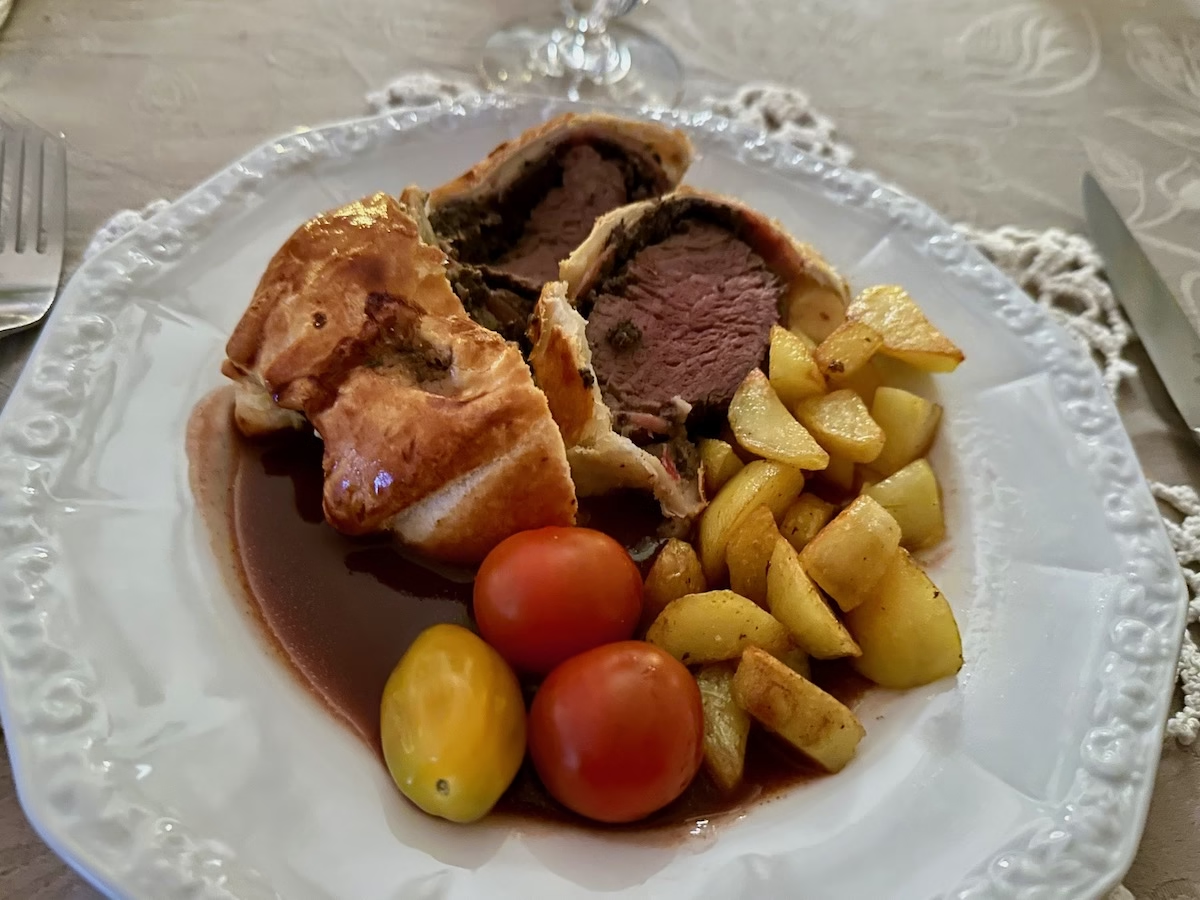
4-6 servings
500-700 g beef fillet, cut into halves
2 tbsp Dijon mustard
500 g wild mushrooms
1 shallot
1 clove garlic
1 tbsp chopped fresh thyme
140 g Parma ham
1 (280 g) large sheet of puff pastry (enough to cover the meat completely)
2 egg yolks + 1 tbsp water
Salt
White pepper
Flaked salt
Plastic foil
Treat the meat and make sure it is at room temperature when cooking. Dry the meat thoroughly with paper towels.
Cut off the head and tail if there are any. These parts of the meat can be used for other dishes, e.g. Rydberg steak or Steak Greta. The piece of meat now weighs about 500-700 grams.
Season the meat and brown in a hot pan with rapeseed oil and butter until nicely browned on all sides.
Brush the beef fillet with Dijon mustard.
Cut the mushrooms, shallots and garlic into pieces and blend in a food processor or chop finely. This is called duxelles.
Fry the duxelles in a dry frying pan until all the liquid has evaporated. Add 1 tbsp rapeseed oil and fry for a further 6-7 minutes. Season with salt and pepper.
Place the Parma ham wrapped in plastic wrap. Spread the duxelles evenly over the ham. Sprinkle with thyme.
Place the beef fillet on the duxelles and roll the fillet in using the foil. Pull the ends of the plastic tightly together to form a package. Place in the fridge for 30 minutes.
Place the puff pastry sheet on plastic wrap and place the meat on top. Then wrap the dough tightly around the meat. Seal the seam with the egg mixture. Trim off any excess pastry. Pull the ends of the plastic tightly together. Refrigerate for 30 minutes.
Preheat the oven to 200 °C (392 °F).
Brush with the egg mixture and cut slits in the pastry. Sprinkle with flaked salt.
Place in the middle of the oven for 30-35 minutes or until the meat has an internal temperature of 54 °C (129 °F). Let the meat rest for about 15 minutes. NOTE: to avoid the pastry becoming soggy, do not cover the meat with aluminum foil or greaseproof paper.