Today, Falukorv is a “Guaranteed Traditional Speciality” (GTS) within the EU. This means that there are strict rules for how it can be produced in order to be called Falukorv. Among other things, it must contain at least 45% meat (from pork and/or beef), be made in Sweden, and be lightly smoked, which guarantees its traditional quality and character.
Falukorv has a specific flavor profile (lightly smoked, mild seasoning with hints of ginger and nutmeg) and a characteristic, firm but juicy consistency
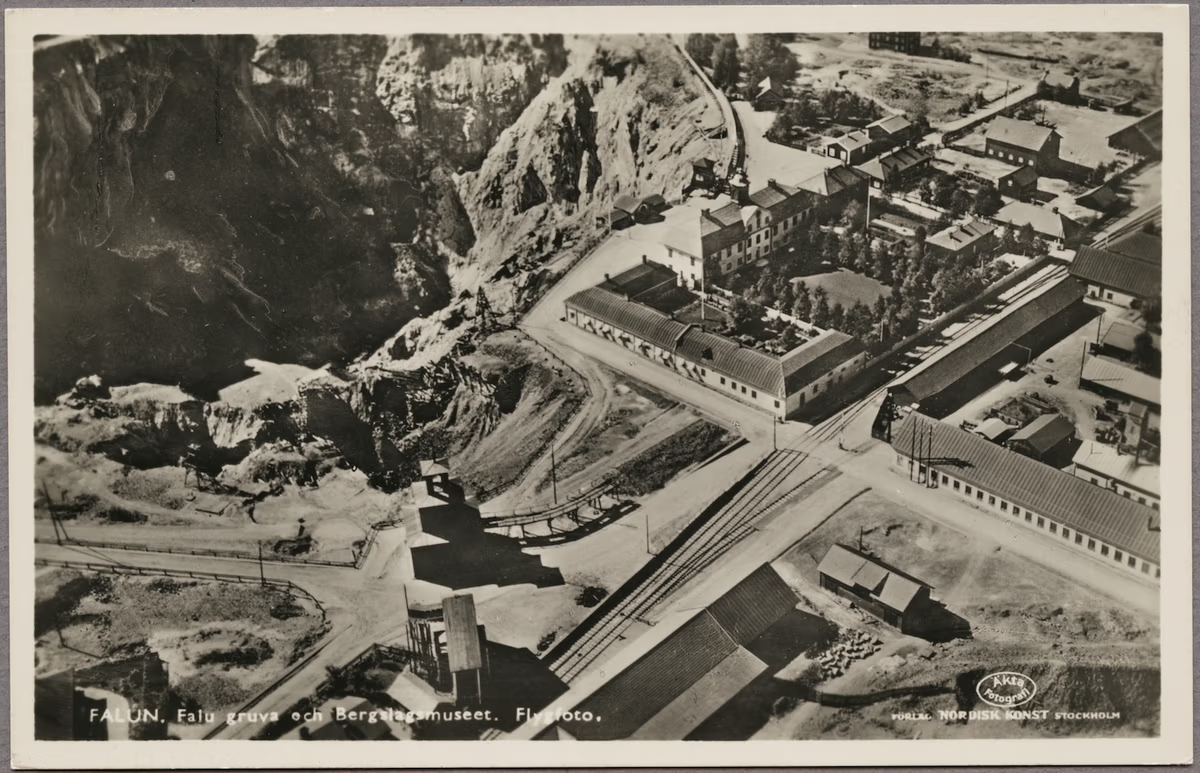
The history of Falukorv is deeply rooted in Sweden’s industrial heritage and stretches back to the 16th and 17th centuries at the Falu copper mine in Dalarna. It is a fascinating story of how a practical solution to a logistical problem led to the creation of one of Sweden’s most iconic dishes.
At the Falu copper mine, the enormous need for labor and materials was evident. Oxen were used to haul the heavy copper ore up from the depths of the mine. These strong animals were absolutely crucial for the operation.
When the oxen had served their time in the mine, they were slaughtered. The problem was what to do with the large amounts of beef that were left over, especially after the hides had been used (which were used for ropes and harnesses in the mine).
From being a practical solution for handling the meat from the mining oxen, the sausage gradually developed. It got its name from the town it originated from – Falukorv.
Falukorv’s equivalent in other countries:
USA, Great Britain and Canada: Bologna Sausage / Ring Bologna
Germany/Austria (and Central Europe): Lyoner / Lyonerwurst
France: Cervelas (thicker variants)
Norway: Middagspølse
Finland: Lauantaimakkara (Lördagskorv)
Denmark: Medisterpølse